

Advisory that moves outcomes.
East Africa’s premier hospital, established in 1955, was trapped in publicly reported governance disputes. A membership based ownership structure designed in the 1950s had become a channel for boardroom contests, abrupt changes in management and repeated litigation. Stakeholders turned adversarial, negative coverage dominated the narrative, and revenue declined as reputation eroded.
A year of sustained counsel to the board, structured stakeholder engagement and disciplined media management. The starting point was evidence: showing directors, with data, that governance conduct was eroding the institution they were appointed to protect. Overlapping court cases were consolidated as part of a coordinated legal and communication strategy, and engagement with insurers, regulators and media moved from confrontation to structured dialogue.
Negative coverage fell from 47 percent to 29 percent of tracked mentions in one year. Admissions rose 5 percent, with key service lines ahead of prior year. The board now conducts its business with the hospital’s interest at the centre, and staff morale and stakeholder confidence have recovered with it.
When the camp opened in August 2025 it became the centre of a high profile conservation dispute. A petition alleged the camp obstructed a wildlife migration corridor and lacked an Environmental Impact Assessment, and a widely shared video carried the claims across local and international media. The facts pointed the other way: all approvals, including a completed EIA, were secured before construction. But verified information was absent from public discussion, cancellations rose, and a court case sought to stop operations.
Engaged in November 2025 to design an integrated public affairs and litigation communication campaign. Court filings were built to serve the legal record and public understanding at once. Journalists were invited to the camp to see conditions first hand and hear directly from Kenya Wildlife Service, community representatives and management. Structured engagement with regulators produced public confirmation of compliance, independent conservation and legal experts provided third party analysis, and court documents were translated into plain summaries for reporters.
Kenya Wildlife Service, the National Environment Management Authority and the Ministry of Tourism publicly affirmed the project’s compliance, presenting a unified institutional position. The petition was withdrawn, with the petitioner citing satisfaction with the facts presented in court, and the matter is concluded. Coverage shifted from allegation driven to evidence led reporting, and bookings stabilised and improved through the campaign period.
Kenya was preparing to roll out universal health coverage on a hospital system already stretched thin. Health stakeholders held that community health volunteers, better organised, trained and compensated, could collect accurate data on the true health landscape and address illness at source, particularly neglected tropical diseases, before it escalated to hospital care. What was missing was government commitment. The J&J Foundation, a convener of healthcare stakeholders, engaged P&L Consulting Group to design a public affairs plan that would secure it.
With a general election approaching, the campaign took the case directly to the point of maximum leverage: the presidential candidates’ policy teams were briefed on the evidence, and the commitment to elevate community health volunteers was reflected in the manifestos of the leading candidates. After the election, that commitment became the basis for structured engagement, built around three anchors: a CHW Bill, a dedicated fund, and the eCHIS digital platform, all carried under a small investment, big impact narrative.
In February 2023, the National and County Governments Coordinating Summit resolved that the national government would support counties with Ksh 2.7 billion in conditional grants over three years for 100,000 community health workers, with service and training standardised through an intergovernmental process. The volunteers health stakeholders had long championed became a recognised, funded national workforce commitment.

The Finance Bill 2024 proposed a 16% VAT on financial services and raised excise duty on money transfers to 20%, pushing total taxation on financial services to 40%. KBA needed to shape public and government discourse rapidly.
Advised on narrative, messaging, and engagement strategy. Developed position statements, op-eds, fact sheets, and media briefing notes. Activated direct media and government engagement channels throughout the Bill’s progression.
Government officials sought KBA’s recommendations directly. KBA reaffirmed as the leading advocacy voice for 46 member financial institutions. The Finance Bill was ultimately rejected by the legislature.
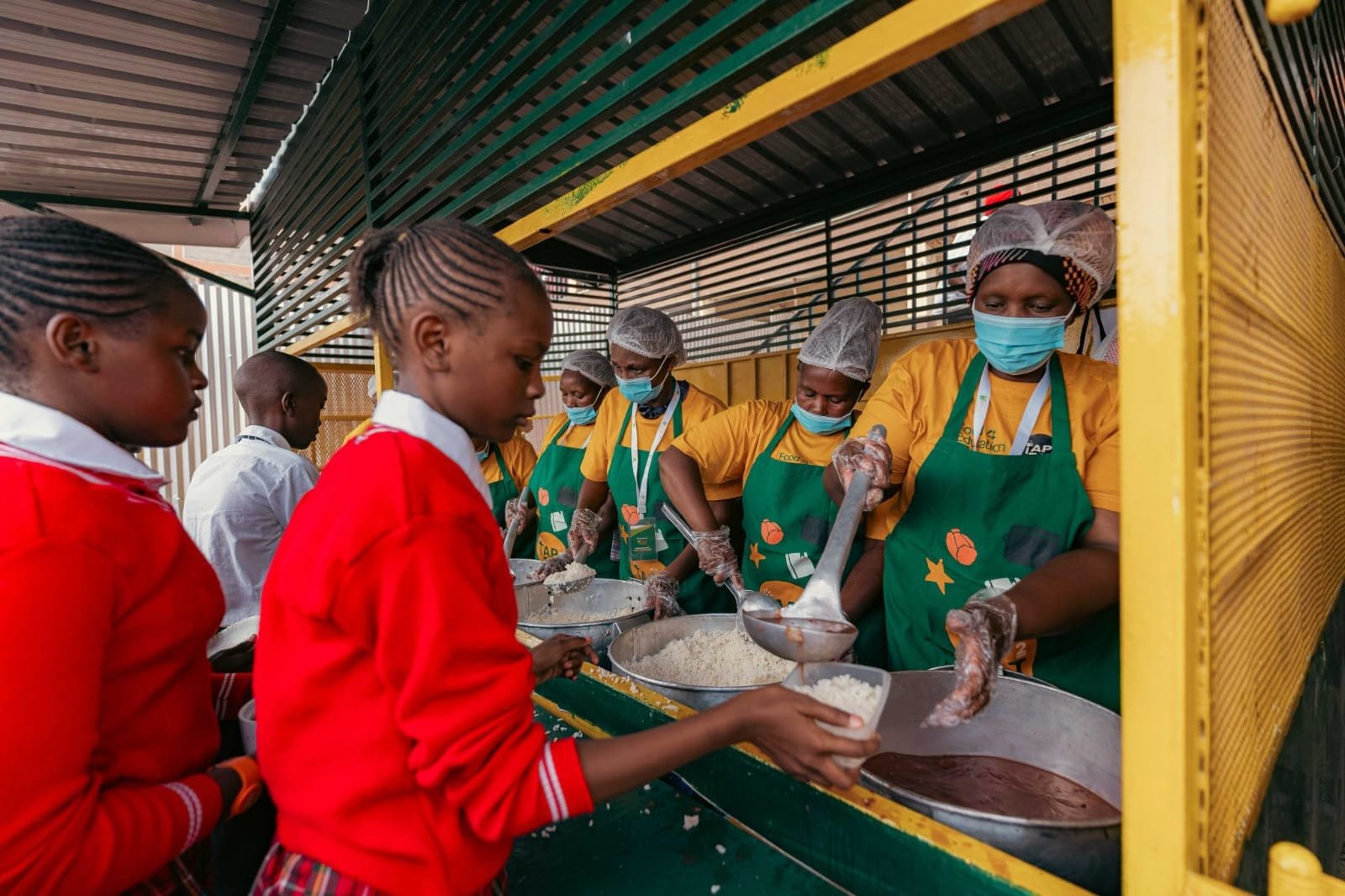
Food4Education had proven the model at home: more than 200 million meals served through government aligned programmes over 14 years, 80 percent of food sourced from local smallholders, and the Tap2Eat platform processing millions of transactions. The next frontier was continental: repositioning from a Kenyan feeding programme to Africa’s centre of excellence for school feeding economics and systems.
Positioned the organisation as implementation leader and policy partner. Thought leadership and proactive media recast school feeding as economic infrastructure, anchored in the constitutional right to food at home and in the economics of returns for the continental audience.
The narrative landed. In June 2026, Zambia’s Ministry of Education signed a four year technical cooperation agreement with Food4Education, supporting the scale up of school feeding from 4.6 million children across 8,193 schools to 5.6 million by the end of 2026. Coverage across Kenyan, Tanzanian and Zambian media carried the story in the intended frame: school feeding as economic infrastructure, led by African governments.